I have been feeling a little out of sorts and in need of inspiration then i came across this video.It is well worth a watch.
Dewey Bozella was locked up for 26 years - a lifetime - for a crime he did not commit. This story is about the triumph of human spirit and living proof of the maxim: "never give up". One man's journey to reclaim his life, against all odds; a man fighting his biggest fight outside the boxing ring without any hatred or bitterness towards the system. Dewey Bozella - courageous, persistent, human and finally...free
http://www.karmatube.org/videos.php?id=2568
Friday, 14 October 2011

Thursday, 13 October 2011
Our bodies do not lie, when we learn to listen to their often subtle messages, they become our best allies. Learning to pay attention to the feelings in our bodies as we chat with friends is a good way to begin to use this skill in daily life.
It has many benefits, firstly it quietens the mind's chatter so we actually hear what is bring said. This is really nice for the other person who will feel this consciously or subconsciously depending on how aware they are.
When we are listening to our on bodies as we speak we also tend to become more conscious of how the other person is listening (or not). I find this to be true even when I'm speaking with someone on the phone, by listening fully I know whether they are really 'with' me or not.
Listen fully and you will become aware when you are listening with an agenda, notice when you are just waiting tor them stop talking so you can have your say. When you notice this relax listen to your body and give them your full attention, you will find as I do (when I remember) that this way of listening is much more satisfying for you both.
It has many benefits, firstly it quietens the mind's chatter so we actually hear what is bring said. This is really nice for the other person who will feel this consciously or subconsciously depending on how aware they are.
When we are listening to our on bodies as we speak we also tend to become more conscious of how the other person is listening (or not). I find this to be true even when I'm speaking with someone on the phone, by listening fully I know whether they are really 'with' me or not.
Listen fully and you will become aware when you are listening with an agenda, notice when you are just waiting tor them stop talking so you can have your say. When you notice this relax listen to your body and give them your full attention, you will find as I do (when I remember) that this way of listening is much more satisfying for you both.
Sunday, 9 October 2011
LOOKING WITH YOUR WHOLE BODY
This is a really long interview and I haven't edited because I think it's well worth reading it all. Enjoy ! after all it is Sunday.
The Complete Interview: A Conversation with Acclaimed Artist Jane Rosen
with Richard Whittaker
Success in the art world is a wildly relative term. And no one would say that Jane Rosen has not been successful. But something happened that took her away from the kind of success she might have found had she continued to pursue her fast start in Manhattan.
She visited the Bay Area, where she lived on a horse ranch south of San Francisco. The exposure to the beauty of the place—the coast, the hills, the redwoods—made a deep impression. One day, as she stepped out of her house, she looked up and saw a red-tailed hawk soaring above her. “As I stood looking up at the hawk, in a voice as clear as day, I heard these words: ‘Tell my story’.” Rosen’s drawings and sculptures are born from the perennial questions: What can nature show us? And what is seeing? Her work shows us something about that. I met the artist at her studio and ranch in San Gregorio, California to talk specifically about seeing…
—Richard Whittaker
Jane Rosen: It’s a hard word for me, “seeing,” because I’m firmly convinced that seeing has nothing to do with the eyes in that way. I’m not saying it doesn’t include the eyes. An impression comes in. It may come in through the eyes. When I’m looking at a bird or an animal, especially when I’m drawing it, the key is the shift in cognition where—and I know when it happens, I can sense it.
Richard Whittaker: Are you talking about drawing?
JR: I’m talking about life. When we talk about taking in an impression, most of the time I’m not taking you in, I’m trying to make an impression on you. I’m going out. And there’s a shift that happens when I’m drawing or when I’m looking at the dog or a horse or looking at someone in my mind’s eye, there’s a shift where something in me listens, but not with my ears. There’s another kind of listening. It’s kind of like from the knees up to the shoulders is like a receiver or a satellite dish allowing something to come in almost through my middle. It could be seeing who someone is. It could be seeing the dog in the gallery when the owner said, my dog doesn’t need water.
RW: Yes. I wanted to hear about that again. It’s an example of this kind of seeing you’re describing, right?
The first look is a word, a name.
To me anything that is attached to
words and names is a mental looking.
JR: Yes. So, I’m standing in the gallery when a woman walks in with a dog and the dog is saying to me, I want water. It was a big Bernese mountain dog. I could see it in the dog’s posture, it’s presence—but it’s a double thing, seeing the dog and also a listening in yourself. So I asked the woman, Would you mind if I gave your dog a bowl of water? And she said, “Oh, my dog has had water and isn’t thirsty.” So I said to the girls at the gallery, do you have a bowl? They gave me this big stainless steel bowl and I went to the bathroom and filled it with water and came back. The woman says again, adamantly, “Trust me. It’s my dog and it’s not thirsty!” Well, as soon as I put the bowl down, the dog started drinking and practically drank the entire huge bowl of water. Then it licked my hand. [laughs]
RW: That is really a seeing, but not what we think of.
JR: Right. But seeing isn’t what we think it is. What we call seeing is “looking.” Looking is when you go out and you look at something. You have a number of facts about that thing and you put them together as a mental construct. Okay? When students in my class look at the model often they are not seeing it. Paul Klee said to his students, “Yes. I want to draw what I see, but first you must see what you draw.”
RW: I agree, we don’t see very much, but what is it when someone stops and keeps looking and then starts to see more, literally.
JR: But that means they kept looking. And that shifts what I would call cognitive gears—so there comes a new moment. The first look is a word, a name. To me anything that is attached to words and names is a mental looking. Then, I think there is a looking with your whole body as if there were tentacles that sense and touch the totality of the thing you’re looking at so that the tree stops being leaves, branches, roots. It starts becoming a clustering, a gathering, a drooping, a lifting, a turning.
RW: I wonder if there are levels of seeing. Because one day I was looking at a sky full of clouds and realized what an overwhelming amount of complexity and detail I was taking in by looking, and how utterly impossible it would be to capture it in words.
JR: What if the dialogue we’re having revolves around finding the right word so that we both know the experience attached to that word? As a teacher, there’s a huge difference, for example, between a sketch and a study. They can be called the same thing. A sketch is something that’s sketchy. Looking is sketchy. A study is where you’re studying with your body, let’s say the dog [pointing to her dog]. You’re observing the various movements and states and gesture, the presence of restfulness. You’re then translating what you see from this study to a piece of paper with the physical marks you’re making. And you’re also mentally using the laws you understand about drawing to create an illusion on that piece of paper. To me, seeing is having all of these things simultaneously in place, that open a feeling for the life of the thing you’re observing.
RW: You say you’re “studying with your body.” Would you say more about that?
JR: Okay. A simple way to talk about it is, I have something called synesthesia. I hear form. So when I’m looking at your shoulders, it could be a staccato note if you’re tense. It could be a rhythmic roll of a stone dropping into water and the rippling out. When I look at it, I hear it. I hear the pieces in the studio. Like yesterday, that big bird on the left. I could have done that carving with my eyes closed. I can see with my eyes closed.
RW: Do you use your hands for that?
JR: Yes. I use my hands to see.
RW: So the sensation through your hands?
JR: I don’t know the name of it except I hear it as a vibration.
RW: Do you touch?
JR: Yes. But I don’t have to physically touch you to touch you. Literally, if I was going to draw you, I’d [she starts moving her hand and making sounds that go with the different lines she’s tracing in the air] So I hear it. Which is probably why I became an artist.
RW: Earlier you used the word listening. I mean this whole word “seeing” is—what is it?
JR: You say, “I see what you mean.” So that’s not a visual thing.
RW: No, not at all.
JR: It’s an understanding.
RW: Right.
JR: To me, the act of seeing is coming into an understanding of the whole of what’s occurring. Like when I’m struggling, for instance, with that drawing of the coyote I did. First, I saw a lone coyote on the hill and the coyote is standing next to a young deer.
RW: Really?
JR: Yes. I have a photograph. The young deer is hanging out with the coyote and I become very interested. The coyote is there day after day on the hill at about 2pm. So now, I’m looking until I can see what is happening.
The only way I can come to an understanding is by drawing it. See those two drawings? [we walk over to the drawings] I figured it out. I took the photograph, which is as abstract as this drawing, the silhouette of a coyote and the bambi! So then I start to draw the coyote and I start to understand that he’s an older coyote. He’s alone and not interested in the deer. He’s more interested in eating gophers. There’s a little bit of his former life, but he’s been rejected from the pack. He’s quite beautiful and he has more of the presence of a dog. So now I begin to see who the coyote is and I’m looking to try to do a drawing of the essence of that coyote. So learning to see is learning to put together my sight with my sensation, which can take in a much larger view.
RW: So this is a seeing that is really coming into contact with what’s there and “looking” isn’t really connecting with what’s there.
JR: No. And what’s there is never what you think is there. It just never is that. One of the things I find remarkable happened from that amber drawing I did of a hawk—the falcon is Horus in Egyptian art. The falcon was considered to be the highest energy because it is that which see in and out simultaneously, which was the energy of the sun. So I thought, okay, I’m going to learn about the hawk, and I’ve been drawing hawks a long time. So that amber drawing of the hawk, Dave Nelson, the hay farmer…
RW: This is your neighbor. He’s not an artist.
JR: Right. He grew up on this land. He goes to pick up his mail at the post office where Leana had put up a little announcement of my show with the hawk on it. Dave calls me up and says, “That’s a damn good drawing of a hawk! If you don’t mind, if I could get me one of them announcements I’d like to take it to Kinko’s. I’m going to blow it up and make me a poster of that hawk. I spend all day with those hawks cause I’m on my tractor and those hawks follow my tractor to eat the mice that get pulled from the haying.” He said, “I know hawks.” And he did. “Damn good hawk!”
I said, “Dave, I’ll give you a drawing of a hawk.”
He said, “I don’t have any money, Jane.”
I said, “Well, you’ve got hay. I’ve got horses. I’ll trade you a hawk for the hay.”
He said, “Okay. That’s a good deal! I’ll take that deal.”
So I’m drawing this hawk for Dave, and Gus Gutierrez—who takes care of the property—comes into the drawing room and looks at the hawk. He doesn’t know anything about this deal. He says, “Jane, if you don’t mind me saying, if you put glasses on that hawk it’ll look just like Dave Nelson!” [laughs] So without me knowing it, my seeing of Dave on the tractor and just knowing Dave, somehow it got into the drawing of the hawk and damned if it didn’t look just like Dave Nelson!
RW: Well, I wanted to go back to where you mentioned earlier something about this bar of light that falls into your studio. Now you said that this bar of light has…
JR: It changed my life. I always had studios where there were no bars of light coming in because that kind of light changes everything, completely washing out the pieces. And at first, I was very upset with the lighting.
RW: Right. There’s a huge contrast between the shadow and the direct sunlight.
JR: All day from dawn until dusk you get extremes of light bouncing all over and it was interfering. Then, just sitting in this chair day after day, week after week—I never did free-standing, vertical pieces like this before; my hawks were all low to the ground, like the Egyptian wing piece—but what started to happen was I started to listen to the light. I started to catch the light at various moments where the light would inform what the height of the piece needed to be, or the turn of the head. I started seeing the light as a help rather than trying to control it. Being in relation to the light was a big thing!
The other thing is that I’m very involved with vertical and horizontal movement, a movement in and out and a movement up and down. An inner emotional stance is an outer visual one. If you get nervous, for example, all the energy seems to go up. Your jaw tightens and your eyes scrunch and you hold your breath up high.
So there’s this movement of going out to the piece, like if you shot an arrow out to the piece. You’re looking at it, but there is also a filtering back so that you’re also aware of yourself and the piece. So that’s a movement in and out. And the movement up and down, I start to wonder, isn’t this a cross? These pieces become representations of a seeing both in and out. And the light, which I resisted enormously, became the teacher.
RW: Right off you said that “seeing has nothing to do with the eyes.” I looked up the etymology of perceive: to obtain, to gather. Apprehend: to grasp. Here we are in the world, so what are the modalities of knowing or receiving the world?
JR: A couple of things. One is the word to attend, attendez, to wait. Attention is to wait.
RW: If you are waiting with attention, there is an openness, right?
JR: Right. So when you talk about seeing what is real, to me, there is an invisible reality behind the visible reality. What I think it’s supposed to look like, I have to let go of, in order to see what it is. That demands attending to it—in other words, waiting—allowing the impression of the bird to come in, rather than going out to it. It’s a really subtle shift.
I keep thinking of working yesterday on that big bird and just seeing myself, literally, start chiseling away at something that looked right, like it was supposed to be there. But I was listening and it’s as if the stone started to speak to me rather than me imposing on it—even to a point where under the chin, unhh, get this off! Then it just started chiseling while I’m thinking, “What the hell are you doing, Rosen? I started using the tooth chisel, and I saw Alex hold his breath—because, with the beak, one mistake and it’s over. And sure enough, a piece of the beak came off. All the Provencal limestone has lots of fossils and shells in it. So it’s inconsistent to carve.
RW: So you can’t count on how each piece will break off.
JR: You don’t know what part is attached to what part. And it came off and I looked at it. It was exactly what was needed, and I never would have figured it out.
RW: Can we say there was a seeing there?
JR: You’re serving something else. You’re not in charge. In fact, if I can be so bold—[laughs] best case scenario—you’re an objective bystander. You’re just there and it’s moving through you, and you’re not in the way. ‘
RW: I’ve sometimes wondered, in terms of being in the world, what is the deepest way of being here? It has occurred to me that, when one has gotten down to the almost metaphysical place of our being here, that this is a place simply of witnessing.
JR: Okay. The practice in the studio is a practice of seeing. If you are speaking of how to be in the world, I don’t know how to say it. We almost always have a vested interest in the outcome of a sculpture or an idea, or an idea about how we want the world to be or how we want ourselves to be and, as a result, we don’t see the sculpture, the coyote, the world or ourselves. So if you let go, which is what happened to me yesterday, and you follow it, there is a moment where this other kind of reality becomes visible. That’s what I think seeing is.
RW: Beautifully put. Our thoughts and desires are always interfering—but not always. Because something can happen, an opening. I’m just sort of riffing on that because another thing about the moment…
JR: Great word, by the way. I don’t mean to interrupt, but “riffing”… When you said, “I’m just riffing on this,” I understood what you were doing. It’s like jazz. You were looking to find the chord of it. There’s an example of seeing what you were looking for—in a word.
RW: [laughs] Language is another subject, language and seeing, that I thought we might touch on, but just to finish this thought, which is that in that moment when something really does quiet down, it’s a moment of silence.
JR: But not always. Because here’s the most shocking thing. Often the largest silence I experience is in the midst of noise. All my ideas and the cacophony actually pulls something out of my belly because of the absurdity of it, and there’s a double experience. This is where the quote from the Mundaka Upanishads is appropriate: “Like two golden birds in the self-same tree, intimate friends, the ego and the Self dwell in the same body. While the former eats the sweet and bitter fruits of the tree of life, the latter looks on in detachment.”
It relates to this because sometimes—I’ve seen this with students. If I can keep them mentally occupied by giving them three conflicting directions of what to do with their drawing tools, their minds are so busy trying to figure it out, that something more essential can come out and it goes I’ll try. It’s like our personalities can blow up so much, sometimes like a balloon, that they burst and the little impartial guy living in the belly, who hardly ever gets a chance to come out goes “I’ll draw that. I’ll try.”
RW: [laughs] I wondered about seeing and presence. That’s not a word we’ve used yet, but I have a feeling there’s a connection between presence and seeing.
JR: I agree. If you talk about being present, I would say that in order to see anything you have to be in play rather in fast forward or instant rewind. You have to be present.
RW: I almost want to ask how can one see without being present?
JR: You can—on the rare occasion, as I was saying. If there’s so much cacophony, it brings up something so fierce in terms of a desire be free, it can give rise to a presence to the cacophony. And the cacophony, like any good mouse, when you turn the light on, it disappears!
RW: So here’s another big question. When are we simply dreaming, or in the grip of an illusion? This is tricky, because I can imagine something and maybe it is a kind of seeing, or I can imagine something and it’s just an illusion.
JR: Right. So you’re up a creek, basically. There are rare moments in the studio where there’s an absolute authority. Something is really there. By the time you’re figuring out what it is, it’s over. You are then going to talk about it. But there are crystal clear moments. The rest of it is probably suspect.
RW: And that leads to this question. Who sees?
JR: Yeah. It’s a conference. It’s not a “who.” I think I said this to you in our first interview. We talked about Mark Rothko. I don’t remember the words I used. But when I speak of seeing I feel that the mind is open and in a relationship to the hands working, which opens a feeling of being more fully alive. That is what I call seeing.
RW: I wanted to ask you something about the sensitivity of animals. I used to throw a ball for this dog who would fetch all day long. One day I was reaching my hand into the mailbox when I spotted the dog watching me at the foot of the driveway over a hundred feet away and I got an idea. My hand was still in the mailbox and I thought, I’ll start with the tiniest movement possible and slowly progress toward the gesture of throwing a ball and see at what point, the dog recognizes that the game is on. So Kpoly had his eye on me. And at my tiniest first movement, as insignificant as I was, he just shot into a state of total preparation, “Let’s go! I’m ready!” How could he have read what seemed to me an imperceptible event? It almost scared me. I could not have conceived of this.
JR: Yes. Because he wasn’t reading your movement. He was reading your energy. So long before you even made your first movement, he was listening to what you were conjuring up. If you watch animals here, you see an absolute, attentive awareness with their whole being.
RW: In modern life, we have no idea of what that is.
JR: Yes we do.
RW: I don’t think so. I didn’t. I had no idea.
JR: I do. It’s called the instinctive life. When a mother runs out to grab her child without even seeing a car. Our instincts take over. Mostly we’re in our heads. If you get down in your body, you have a chance of hearing that.
RW: Can we call that seeing?
JR: Yes. That’s another form of seeing. But when I talked about the conference, it’s that more than one part of you needs to see. You can’t see with your head alone. You can’t see with your heart alone, because it’s very partial. You can’t see with your body alone because basically, I don’t want to put down the cigarette or the cake.
The day I met that raven you were asking about, this is what happened. I heard the dogs barking in the living room. Not a bark like “someone is here,” which is an announcement. Not a bark like “get away from my stuff.” That’s a territorial thing. Not a bark of fear like, “Oh, my God there’s a bobcat on the deck!” It was a bark I wasn’t used to, a kind of “What are you doing?”
I walked into the living room and there was the raven underneath the chair at the dining room table. I looked at this big raven with huge claws and this huge Roman beak. The raven somehow had walked into the house before we had become friends and had gotten stuck underneath the chair. I believe it was a mom and she was coming in looking for food.
I looked at the raven and the raven looked at me. She had these beautiful eyes and she blinked at me. It was clear she said to me, “I’m stuck. I don’t know how I got under this chair. I can’t get out and you’ve got two pretty big dogs. I’m in a situation here.”
So I looked at the raven and said, “Okay. Here’s the deal. You’re big. You have sharp claws and this beak. You could hurt me. I’m going to pet your back and if you don’t try to peck me or claw me, I will get you out from under the chair. If you try to peck me or claw me, you’re on your own.”
She looked at me, cocking her head like she was thinking about it. It wasn’t like she understood my words or I understood hers. There was something in my tone that was explaining to her, in the same way there was something in your inner tone explaining to the dog that you were about to make a move. He was watching in an instinctive way what you were conjuring. And was just waiting for your signal. He had it worked out long before you did.
So I pet the back of the raven and not only does she not claw me, she pulls her claws into her belly and tucks her beak into her chest. I pick her up and I hold her like this [cradled in her arms] and she is perfectly still. I put her out on the picnic table figuring she would make a beeline out of there. She turned around, she looked at me and she nodded.
The Complete Interview: A Conversation with Acclaimed Artist Jane Rosen
with Richard Whittaker
Success in the art world is a wildly relative term. And no one would say that Jane Rosen has not been successful. But something happened that took her away from the kind of success she might have found had she continued to pursue her fast start in Manhattan.
She visited the Bay Area, where she lived on a horse ranch south of San Francisco. The exposure to the beauty of the place—the coast, the hills, the redwoods—made a deep impression. One day, as she stepped out of her house, she looked up and saw a red-tailed hawk soaring above her. “As I stood looking up at the hawk, in a voice as clear as day, I heard these words: ‘Tell my story’.” Rosen’s drawings and sculptures are born from the perennial questions: What can nature show us? And what is seeing? Her work shows us something about that. I met the artist at her studio and ranch in San Gregorio, California to talk specifically about seeing…
—Richard Whittaker
Jane Rosen: It’s a hard word for me, “seeing,” because I’m firmly convinced that seeing has nothing to do with the eyes in that way. I’m not saying it doesn’t include the eyes. An impression comes in. It may come in through the eyes. When I’m looking at a bird or an animal, especially when I’m drawing it, the key is the shift in cognition where—and I know when it happens, I can sense it.
Richard Whittaker: Are you talking about drawing?
JR: I’m talking about life. When we talk about taking in an impression, most of the time I’m not taking you in, I’m trying to make an impression on you. I’m going out. And there’s a shift that happens when I’m drawing or when I’m looking at the dog or a horse or looking at someone in my mind’s eye, there’s a shift where something in me listens, but not with my ears. There’s another kind of listening. It’s kind of like from the knees up to the shoulders is like a receiver or a satellite dish allowing something to come in almost through my middle. It could be seeing who someone is. It could be seeing the dog in the gallery when the owner said, my dog doesn’t need water.
RW: Yes. I wanted to hear about that again. It’s an example of this kind of seeing you’re describing, right?
The first look is a word, a name.
To me anything that is attached to
words and names is a mental looking.
JR: Yes. So, I’m standing in the gallery when a woman walks in with a dog and the dog is saying to me, I want water. It was a big Bernese mountain dog. I could see it in the dog’s posture, it’s presence—but it’s a double thing, seeing the dog and also a listening in yourself. So I asked the woman, Would you mind if I gave your dog a bowl of water? And she said, “Oh, my dog has had water and isn’t thirsty.” So I said to the girls at the gallery, do you have a bowl? They gave me this big stainless steel bowl and I went to the bathroom and filled it with water and came back. The woman says again, adamantly, “Trust me. It’s my dog and it’s not thirsty!” Well, as soon as I put the bowl down, the dog started drinking and practically drank the entire huge bowl of water. Then it licked my hand. [laughs]
RW: That is really a seeing, but not what we think of.
JR: Right. But seeing isn’t what we think it is. What we call seeing is “looking.” Looking is when you go out and you look at something. You have a number of facts about that thing and you put them together as a mental construct. Okay? When students in my class look at the model often they are not seeing it. Paul Klee said to his students, “Yes. I want to draw what I see, but first you must see what you draw.”
RW: I agree, we don’t see very much, but what is it when someone stops and keeps looking and then starts to see more, literally.
JR: But that means they kept looking. And that shifts what I would call cognitive gears—so there comes a new moment. The first look is a word, a name. To me anything that is attached to words and names is a mental looking. Then, I think there is a looking with your whole body as if there were tentacles that sense and touch the totality of the thing you’re looking at so that the tree stops being leaves, branches, roots. It starts becoming a clustering, a gathering, a drooping, a lifting, a turning.
RW: I wonder if there are levels of seeing. Because one day I was looking at a sky full of clouds and realized what an overwhelming amount of complexity and detail I was taking in by looking, and how utterly impossible it would be to capture it in words.
JR: What if the dialogue we’re having revolves around finding the right word so that we both know the experience attached to that word? As a teacher, there’s a huge difference, for example, between a sketch and a study. They can be called the same thing. A sketch is something that’s sketchy. Looking is sketchy. A study is where you’re studying with your body, let’s say the dog [pointing to her dog]. You’re observing the various movements and states and gesture, the presence of restfulness. You’re then translating what you see from this study to a piece of paper with the physical marks you’re making. And you’re also mentally using the laws you understand about drawing to create an illusion on that piece of paper. To me, seeing is having all of these things simultaneously in place, that open a feeling for the life of the thing you’re observing.
RW: You say you’re “studying with your body.” Would you say more about that?
JR: Okay. A simple way to talk about it is, I have something called synesthesia. I hear form. So when I’m looking at your shoulders, it could be a staccato note if you’re tense. It could be a rhythmic roll of a stone dropping into water and the rippling out. When I look at it, I hear it. I hear the pieces in the studio. Like yesterday, that big bird on the left. I could have done that carving with my eyes closed. I can see with my eyes closed.
RW: Do you use your hands for that?
JR: Yes. I use my hands to see.
RW: So the sensation through your hands?
JR: I don’t know the name of it except I hear it as a vibration.
RW: Do you touch?
JR: Yes. But I don’t have to physically touch you to touch you. Literally, if I was going to draw you, I’d [she starts moving her hand and making sounds that go with the different lines she’s tracing in the air] So I hear it. Which is probably why I became an artist.
RW: Earlier you used the word listening. I mean this whole word “seeing” is—what is it?
JR: You say, “I see what you mean.” So that’s not a visual thing.
RW: No, not at all.
JR: It’s an understanding.
RW: Right.
JR: To me, the act of seeing is coming into an understanding of the whole of what’s occurring. Like when I’m struggling, for instance, with that drawing of the coyote I did. First, I saw a lone coyote on the hill and the coyote is standing next to a young deer.
RW: Really?
JR: Yes. I have a photograph. The young deer is hanging out with the coyote and I become very interested. The coyote is there day after day on the hill at about 2pm. So now, I’m looking until I can see what is happening.
The only way I can come to an understanding is by drawing it. See those two drawings? [we walk over to the drawings] I figured it out. I took the photograph, which is as abstract as this drawing, the silhouette of a coyote and the bambi! So then I start to draw the coyote and I start to understand that he’s an older coyote. He’s alone and not interested in the deer. He’s more interested in eating gophers. There’s a little bit of his former life, but he’s been rejected from the pack. He’s quite beautiful and he has more of the presence of a dog. So now I begin to see who the coyote is and I’m looking to try to do a drawing of the essence of that coyote. So learning to see is learning to put together my sight with my sensation, which can take in a much larger view.
RW: So this is a seeing that is really coming into contact with what’s there and “looking” isn’t really connecting with what’s there.
JR: No. And what’s there is never what you think is there. It just never is that. One of the things I find remarkable happened from that amber drawing I did of a hawk—the falcon is Horus in Egyptian art. The falcon was considered to be the highest energy because it is that which see in and out simultaneously, which was the energy of the sun. So I thought, okay, I’m going to learn about the hawk, and I’ve been drawing hawks a long time. So that amber drawing of the hawk, Dave Nelson, the hay farmer…
RW: This is your neighbor. He’s not an artist.
JR: Right. He grew up on this land. He goes to pick up his mail at the post office where Leana had put up a little announcement of my show with the hawk on it. Dave calls me up and says, “That’s a damn good drawing of a hawk! If you don’t mind, if I could get me one of them announcements I’d like to take it to Kinko’s. I’m going to blow it up and make me a poster of that hawk. I spend all day with those hawks cause I’m on my tractor and those hawks follow my tractor to eat the mice that get pulled from the haying.” He said, “I know hawks.” And he did. “Damn good hawk!”
I said, “Dave, I’ll give you a drawing of a hawk.”
He said, “I don’t have any money, Jane.”
I said, “Well, you’ve got hay. I’ve got horses. I’ll trade you a hawk for the hay.”
He said, “Okay. That’s a good deal! I’ll take that deal.”
So I’m drawing this hawk for Dave, and Gus Gutierrez—who takes care of the property—comes into the drawing room and looks at the hawk. He doesn’t know anything about this deal. He says, “Jane, if you don’t mind me saying, if you put glasses on that hawk it’ll look just like Dave Nelson!” [laughs] So without me knowing it, my seeing of Dave on the tractor and just knowing Dave, somehow it got into the drawing of the hawk and damned if it didn’t look just like Dave Nelson!
RW: Well, I wanted to go back to where you mentioned earlier something about this bar of light that falls into your studio. Now you said that this bar of light has…
JR: It changed my life. I always had studios where there were no bars of light coming in because that kind of light changes everything, completely washing out the pieces. And at first, I was very upset with the lighting.
RW: Right. There’s a huge contrast between the shadow and the direct sunlight.
JR: All day from dawn until dusk you get extremes of light bouncing all over and it was interfering. Then, just sitting in this chair day after day, week after week—I never did free-standing, vertical pieces like this before; my hawks were all low to the ground, like the Egyptian wing piece—but what started to happen was I started to listen to the light. I started to catch the light at various moments where the light would inform what the height of the piece needed to be, or the turn of the head. I started seeing the light as a help rather than trying to control it. Being in relation to the light was a big thing!
The other thing is that I’m very involved with vertical and horizontal movement, a movement in and out and a movement up and down. An inner emotional stance is an outer visual one. If you get nervous, for example, all the energy seems to go up. Your jaw tightens and your eyes scrunch and you hold your breath up high.
So there’s this movement of going out to the piece, like if you shot an arrow out to the piece. You’re looking at it, but there is also a filtering back so that you’re also aware of yourself and the piece. So that’s a movement in and out. And the movement up and down, I start to wonder, isn’t this a cross? These pieces become representations of a seeing both in and out. And the light, which I resisted enormously, became the teacher.
RW: Right off you said that “seeing has nothing to do with the eyes.” I looked up the etymology of perceive: to obtain, to gather. Apprehend: to grasp. Here we are in the world, so what are the modalities of knowing or receiving the world?
JR: A couple of things. One is the word to attend, attendez, to wait. Attention is to wait.
RW: If you are waiting with attention, there is an openness, right?
JR: Right. So when you talk about seeing what is real, to me, there is an invisible reality behind the visible reality. What I think it’s supposed to look like, I have to let go of, in order to see what it is. That demands attending to it—in other words, waiting—allowing the impression of the bird to come in, rather than going out to it. It’s a really subtle shift.
I keep thinking of working yesterday on that big bird and just seeing myself, literally, start chiseling away at something that looked right, like it was supposed to be there. But I was listening and it’s as if the stone started to speak to me rather than me imposing on it—even to a point where under the chin, unhh, get this off! Then it just started chiseling while I’m thinking, “What the hell are you doing, Rosen? I started using the tooth chisel, and I saw Alex hold his breath—because, with the beak, one mistake and it’s over. And sure enough, a piece of the beak came off. All the Provencal limestone has lots of fossils and shells in it. So it’s inconsistent to carve.
RW: So you can’t count on how each piece will break off.
JR: You don’t know what part is attached to what part. And it came off and I looked at it. It was exactly what was needed, and I never would have figured it out.
RW: Can we say there was a seeing there?
JR: You’re serving something else. You’re not in charge. In fact, if I can be so bold—[laughs] best case scenario—you’re an objective bystander. You’re just there and it’s moving through you, and you’re not in the way. ‘
RW: I’ve sometimes wondered, in terms of being in the world, what is the deepest way of being here? It has occurred to me that, when one has gotten down to the almost metaphysical place of our being here, that this is a place simply of witnessing.
JR: Okay. The practice in the studio is a practice of seeing. If you are speaking of how to be in the world, I don’t know how to say it. We almost always have a vested interest in the outcome of a sculpture or an idea, or an idea about how we want the world to be or how we want ourselves to be and, as a result, we don’t see the sculpture, the coyote, the world or ourselves. So if you let go, which is what happened to me yesterday, and you follow it, there is a moment where this other kind of reality becomes visible. That’s what I think seeing is.
RW: Beautifully put. Our thoughts and desires are always interfering—but not always. Because something can happen, an opening. I’m just sort of riffing on that because another thing about the moment…
JR: Great word, by the way. I don’t mean to interrupt, but “riffing”… When you said, “I’m just riffing on this,” I understood what you were doing. It’s like jazz. You were looking to find the chord of it. There’s an example of seeing what you were looking for—in a word.
RW: [laughs] Language is another subject, language and seeing, that I thought we might touch on, but just to finish this thought, which is that in that moment when something really does quiet down, it’s a moment of silence.
JR: But not always. Because here’s the most shocking thing. Often the largest silence I experience is in the midst of noise. All my ideas and the cacophony actually pulls something out of my belly because of the absurdity of it, and there’s a double experience. This is where the quote from the Mundaka Upanishads is appropriate: “Like two golden birds in the self-same tree, intimate friends, the ego and the Self dwell in the same body. While the former eats the sweet and bitter fruits of the tree of life, the latter looks on in detachment.”
It relates to this because sometimes—I’ve seen this with students. If I can keep them mentally occupied by giving them three conflicting directions of what to do with their drawing tools, their minds are so busy trying to figure it out, that something more essential can come out and it goes I’ll try. It’s like our personalities can blow up so much, sometimes like a balloon, that they burst and the little impartial guy living in the belly, who hardly ever gets a chance to come out goes “I’ll draw that. I’ll try.”
RW: [laughs] I wondered about seeing and presence. That’s not a word we’ve used yet, but I have a feeling there’s a connection between presence and seeing.
JR: I agree. If you talk about being present, I would say that in order to see anything you have to be in play rather in fast forward or instant rewind. You have to be present.
RW: I almost want to ask how can one see without being present?
JR: You can—on the rare occasion, as I was saying. If there’s so much cacophony, it brings up something so fierce in terms of a desire be free, it can give rise to a presence to the cacophony. And the cacophony, like any good mouse, when you turn the light on, it disappears!
RW: So here’s another big question. When are we simply dreaming, or in the grip of an illusion? This is tricky, because I can imagine something and maybe it is a kind of seeing, or I can imagine something and it’s just an illusion.
JR: Right. So you’re up a creek, basically. There are rare moments in the studio where there’s an absolute authority. Something is really there. By the time you’re figuring out what it is, it’s over. You are then going to talk about it. But there are crystal clear moments. The rest of it is probably suspect.
RW: And that leads to this question. Who sees?
JR: Yeah. It’s a conference. It’s not a “who.” I think I said this to you in our first interview. We talked about Mark Rothko. I don’t remember the words I used. But when I speak of seeing I feel that the mind is open and in a relationship to the hands working, which opens a feeling of being more fully alive. That is what I call seeing.
RW: I wanted to ask you something about the sensitivity of animals. I used to throw a ball for this dog who would fetch all day long. One day I was reaching my hand into the mailbox when I spotted the dog watching me at the foot of the driveway over a hundred feet away and I got an idea. My hand was still in the mailbox and I thought, I’ll start with the tiniest movement possible and slowly progress toward the gesture of throwing a ball and see at what point, the dog recognizes that the game is on. So Kpoly had his eye on me. And at my tiniest first movement, as insignificant as I was, he just shot into a state of total preparation, “Let’s go! I’m ready!” How could he have read what seemed to me an imperceptible event? It almost scared me. I could not have conceived of this.
JR: Yes. Because he wasn’t reading your movement. He was reading your energy. So long before you even made your first movement, he was listening to what you were conjuring up. If you watch animals here, you see an absolute, attentive awareness with their whole being.
RW: In modern life, we have no idea of what that is.
JR: Yes we do.
RW: I don’t think so. I didn’t. I had no idea.
JR: I do. It’s called the instinctive life. When a mother runs out to grab her child without even seeing a car. Our instincts take over. Mostly we’re in our heads. If you get down in your body, you have a chance of hearing that.
RW: Can we call that seeing?
JR: Yes. That’s another form of seeing. But when I talked about the conference, it’s that more than one part of you needs to see. You can’t see with your head alone. You can’t see with your heart alone, because it’s very partial. You can’t see with your body alone because basically, I don’t want to put down the cigarette or the cake.
The day I met that raven you were asking about, this is what happened. I heard the dogs barking in the living room. Not a bark like “someone is here,” which is an announcement. Not a bark like “get away from my stuff.” That’s a territorial thing. Not a bark of fear like, “Oh, my God there’s a bobcat on the deck!” It was a bark I wasn’t used to, a kind of “What are you doing?”
I walked into the living room and there was the raven underneath the chair at the dining room table. I looked at this big raven with huge claws and this huge Roman beak. The raven somehow had walked into the house before we had become friends and had gotten stuck underneath the chair. I believe it was a mom and she was coming in looking for food.
I looked at the raven and the raven looked at me. She had these beautiful eyes and she blinked at me. It was clear she said to me, “I’m stuck. I don’t know how I got under this chair. I can’t get out and you’ve got two pretty big dogs. I’m in a situation here.”
So I looked at the raven and said, “Okay. Here’s the deal. You’re big. You have sharp claws and this beak. You could hurt me. I’m going to pet your back and if you don’t try to peck me or claw me, I will get you out from under the chair. If you try to peck me or claw me, you’re on your own.”
She looked at me, cocking her head like she was thinking about it. It wasn’t like she understood my words or I understood hers. There was something in my tone that was explaining to her, in the same way there was something in your inner tone explaining to the dog that you were about to make a move. He was watching in an instinctive way what you were conjuring. And was just waiting for your signal. He had it worked out long before you did.
So I pet the back of the raven and not only does she not claw me, she pulls her claws into her belly and tucks her beak into her chest. I pick her up and I hold her like this [cradled in her arms] and she is perfectly still. I put her out on the picnic table figuring she would make a beeline out of there. She turned around, she looked at me and she nodded.
Friday, 7 October 2011
Thursday, 6 October 2011
Here is an inspiring true story I came across and couldn't resist sharing.
If you read the front page story of the San Francisco Chronicle on Thursday, Dec 15, 2005, you would have read about a female humpback whale who had become entangled in a spider web of crab traps and lines.
The fifty-foot whale was weighted down by hundreds of pounds of traps that caused her to struggle to stay afloat. She also had hundreds of yards of line rope wrapped around her her tail, her torso and a line tugging in her mouth.
A fisherman spotted her just east of the Farallone Islands (outside the Golden Gate) and radioed an environmental group for help. Within a few hours, the rescue team arrived and determined that she was so bad off, the only way to save her was to dive in and untangle her - a very dangerous proposition. One slap of the tail could kill a rescuer.
They worked for hours with curved knives and eventually freed her. When she was free, the divers say she swam in what seemed like joyous circles. She then came back to each and every diver, one at a time, and nudged them, pushed them gently around - she thanked them. Some said it was the most incredibly beautiful experience of their lives.
The guy who cut the rope out of her mouth says her eye was following him the whole time, and he will never be the same.
May you, and all those you love, be so blessed and fortunate to be surrounded by people who will help you get untangled from the things that are binding you. And, may you always know the joy of giving and receiving gratitude.
If you read the front page story of the San Francisco Chronicle on Thursday, Dec 15, 2005, you would have read about a female humpback whale who had become entangled in a spider web of crab traps and lines.
The fifty-foot whale was weighted down by hundreds of pounds of traps that caused her to struggle to stay afloat. She also had hundreds of yards of line rope wrapped around her her tail, her torso and a line tugging in her mouth.
A fisherman spotted her just east of the Farallone Islands (outside the Golden Gate) and radioed an environmental group for help. Within a few hours, the rescue team arrived and determined that she was so bad off, the only way to save her was to dive in and untangle her - a very dangerous proposition. One slap of the tail could kill a rescuer.
They worked for hours with curved knives and eventually freed her. When she was free, the divers say she swam in what seemed like joyous circles. She then came back to each and every diver, one at a time, and nudged them, pushed them gently around - she thanked them. Some said it was the most incredibly beautiful experience of their lives.
The guy who cut the rope out of her mouth says her eye was following him the whole time, and he will never be the same.
May you, and all those you love, be so blessed and fortunate to be surrounded by people who will help you get untangled from the things that are binding you. And, may you always know the joy of giving and receiving gratitude.
Wednesday, 5 October 2011
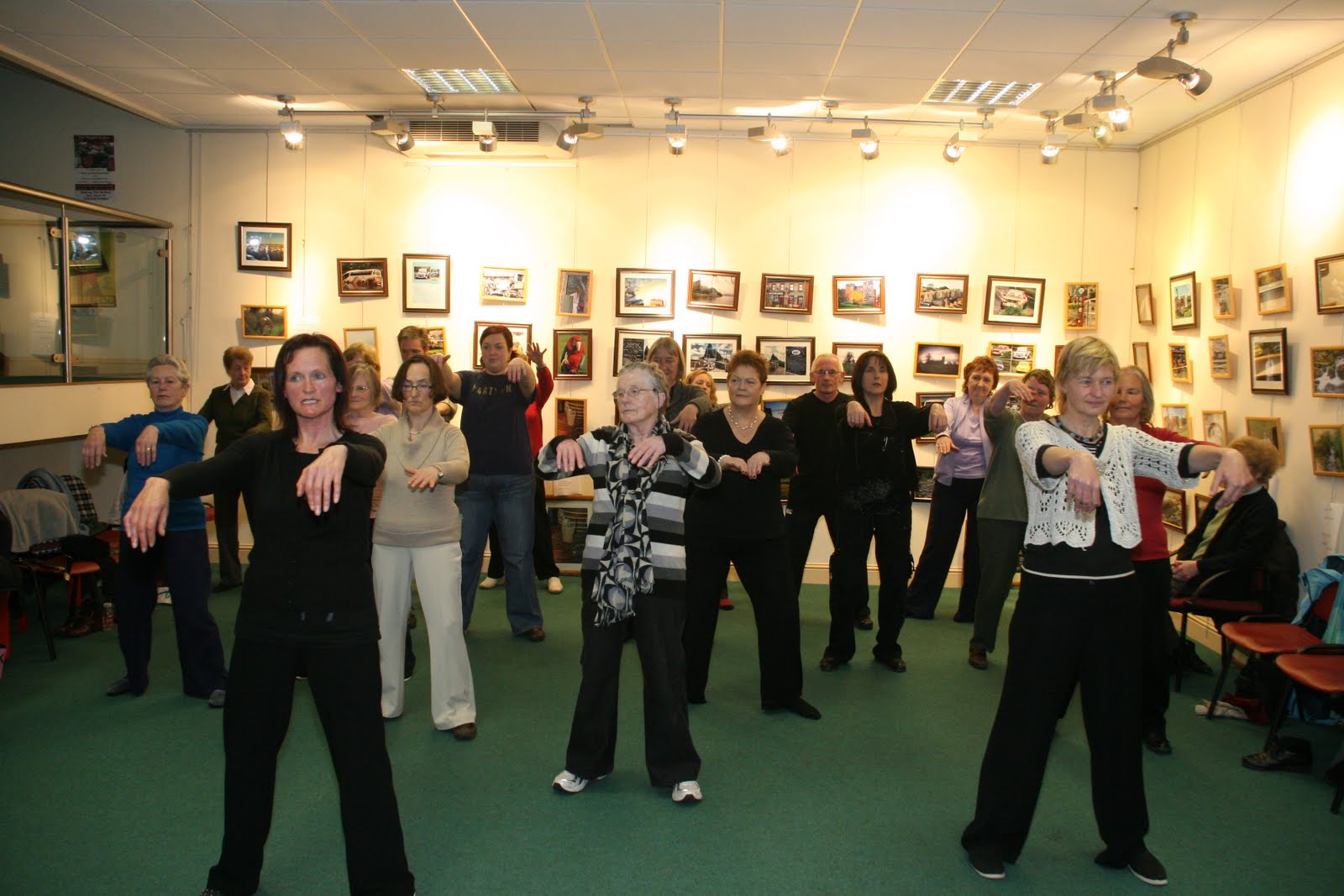
If you have just begun tai chi welcome. Open to an amazing journey inward to discover yourself.
A journey that can awaken both your body and mind.
In your daily practice your body will begin to reveal itself to you in a whole new way, as you give it soft warm attention it will begin to soften and open itself to you.
You will have the opportunity to discover what an wonderful companion and teacher your own body can be.
Our bodies don't lie to us they are not as programmed or conditioned as our minds.
So when you listens to your body softly and are gentle with it, it comes to trust you and reveals itself.
It will teach you patience, awareness, and greatest of all it will teach you love.
Tuesday, 4 October 2011
Here again are the first two lessons of the introductory form for beginners, I'm delighted to be sharing tai chi with you.
Letting go can feel counterinuitive. the mind tells us that we need to hold on, and brace ourselves in order to be 'ready' for the world.
We tend to spend most of our time in alert mode, until we teach ourselves to relax and let go.
If you are anything like me you too need to practice letting go regularly (all the time !), need to remind yourself to soften your face and jaw, to take big deep slow breaths . . . and let them out even slower.
Notice the internal change as you relax, notice that actually you are more aware and alert having relaxed than in 'alert mode'. It is very good to notice this consciously and confirm for yourself how true it is. This conscious noticing helps teach your subconscious mind that it really is safe to stay relaxed.
Deep down we all have a three year old inside who needs to be reassured. Who needs
a cuddle and lots of love . Spend some time with your three year old. Teach the three year old that it is safe to relax. You will be amazed by the change this can make in your life.
Have a wonderful relaxing day.
Introductory Lessons 1 & 2 from Heartworker on Vimeo.
Letting go can feel counterinuitive. the mind tells us that we need to hold on, and brace ourselves in order to be 'ready' for the world.
We tend to spend most of our time in alert mode, until we teach ourselves to relax and let go.
If you are anything like me you too need to practice letting go regularly (all the time !), need to remind yourself to soften your face and jaw, to take big deep slow breaths . . . and let them out even slower.
Notice the internal change as you relax, notice that actually you are more aware and alert having relaxed than in 'alert mode'. It is very good to notice this consciously and confirm for yourself how true it is. This conscious noticing helps teach your subconscious mind that it really is safe to stay relaxed.
Deep down we all have a three year old inside who needs to be reassured. Who needs
a cuddle and lots of love . Spend some time with your three year old. Teach the three year old that it is safe to relax. You will be amazed by the change this can make in your life.
Have a wonderful relaxing day.
Subscribe to:
Posts (Atom)